A Better Way to Do Hobbies Without Triggering Pain Flares
If living with chronic pain has taught people anything, it is that pain is not always predictable. One day feels manageable, the next day everything feels louder and harder. That sudden spike is what is often called a flare-up. A flare-up is not just “a bad day.” It is when symptoms rise above the usual level and stick around for a while. Pain can feel sharper, more widespread, or paired with fatigue, brain fog, or stiffness. It can show up during an activity, or even more frustratingly, hours later or the next day.
But here is the important part to hold onto. A flare-up does not always mean damage has been done. For many chronic pain conditions, the nervous system has become extra alert. It reacts quickly, sometimes too quickly, and tries to protect the body. Understanding that can take away some of the fear and replace it with a bit more control.
Why Hobbies Sometimes Set Things Off
This is where things can feel unfair, because hobbies are supposed to be the good part of the day. And yet, they are often when flare-ups sneak in. A big reason is repetition and duration. Sitting and knitting for an hour, leaning over a puzzle, gripping tools while gardening, or even standing in the kitchen cooking something enjoyable can quietly build strain. The body may tolerate it in the moment, especially when the mind is engaged and happy, but later it responds with increased pain.
There is also something called delayed pain response. Many people with chronic pain notice that they feel fine during the activity, then wake up the next day feeling like they overdid it. That is not imagined. It is actually a real pattern linked to how the nervous system processes effort. Even excitement plays a role. Enjoyment still activates the body, and it is a good thing, but if the system is already sensitive, it can tip things over the edge. None of this means hobbies are the problem, it just means the approach might need a little adjusting.
Pacing Is the Skill That Changes Everything
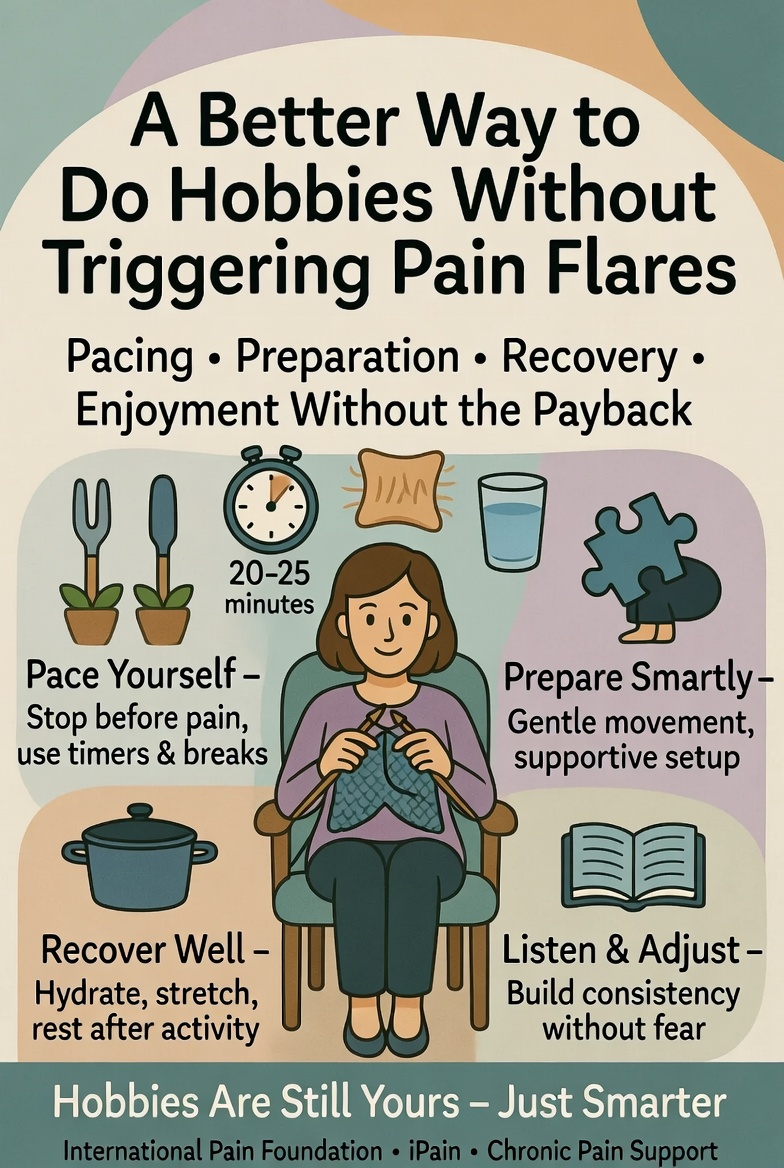
If there is one concept that can truly protect against flare-ups, it is pacing. And yes, it can feel a bit unnatural at first. Pacing basically means stopping before the body demands it. Not when pain spikes, but earlier, when things still feel okay. A helpful way to think about it is doing about half to two-thirds of what feels possible, because that way, you leave a “cushion” in a way, so the nervous system does not feel pushed.
Breaking hobbies into smaller chunks helps a lot. Set a timer for 20 or 25 minutes, then take a real break. Not a quick scroll on the phone, but a change of position. Stand up, stretch, walk around, or just rest. Then go back if it feels right. It might feel like less is getting done, but in reality, more consistency is being built. And that is what allows hobbies to stay part of life long term.
Setting Things Up So the Body Feels Safer
A little preparation goes a long way, and it does not have to be complicated. In a way, you’re giving your body a heads-up before starting something enjoyable. Gentle movement helps. A few stretches, a short walk, or even rolling the shoulders and wrists can wake things up without strain. Some people find that using heat beforehand, like a warm pack on a sore area, makes everything feel more flexible.
The setup matters too. Supportive chairs, cushions, good lighting, and tools that are easier to grip all reduce background stress on the body. These small adjustments can be the difference between finishing a hobby feeling okay versus paying for it later.
What Happens After Matters More Than You Think
A lot of people focus on getting through the activity, but what comes after is just as important. Recovery is where the body decides how it is going to respond. Simple things help more than they might seem. Drinking water, doing a few gentle stretches, or lying down for a short rest can signal to the nervous system that things are okay. Some people prefer heat, others prefer cold. It is worth experimenting to see what feels best. Sleep is also a big piece of this. After a day that includes more activity, giving the body a chance to rest deeply can prevent that next-day flare.
Learning to Listen Without Letting Fear Take Over
This part takes time, and that is okay. Pain can feel like an alarm that means “stop everything.” But with chronic pain, it is often more like a sensitive smoke detector. It reacts quickly, sometimes even when there is no real danger. However, the goal is not to ignore pain, but to get curious about it. Is this discomfort building slowly, or is it a sharp warning? Does taking a short break help? Over time, patterns start to appear, and those patterns become incredibly useful.
It is also worth holding onto this idea. Waiting to feel motivated or pain-free before doing something often leads to doing less and less over time. And when activity drops, the body can become more stiff, more sensitive, and less resilient. Muscles weaken, joints feel tighter, and even energy levels can dip, which creates a cycle where avoiding activity actually makes flare-ups more likely, not less.
That is why continuing to do things matters so much. Activity helps keep the body conditioned and the nervous system a little more steady. It supports circulation, mobility, and even mood. For those in their later years, this becomes even more important. Gentle, regular movement helps maintain independence, balance, and confidence in everyday life. It comes down to reminding the body, again and again, that it is safe to move.
Of course, listening to the body still comes first. If something feels overwhelming or sharply painful, that is a signal to ease off, change approach, or rest. There is a difference between discomfort that settles with a break and pain that feels like too much. Learning that difference is a skill, and it gets clearer with time.
With the right pacing, a bit of planning, and some patience, hobbies can stay part of life. Maybe they look a little different now. Maybe they happen in shorter sessions. But they are still there, and they still count. Chronic pain changes the rules, but it does not take away the ability to create, to enjoy, and to feel those small moments of satisfaction. Those moments are worth holding onto, and they are absolutely still within reach.
Author: Jennifer Dawson
Published by International Pain Foundation, Team iPain, iPain Blog
