
How Simple Home Changes Help Seniors Live Safer and More Comfortably
For seniors with chronic pain in Arizona Legislative District 7, and the family caregivers and neighbors supporting them, home can quietly become the hardest place to move. The core tension is simple: mobility limitations collide with everyday design, and common home accessibility barriers like narrow passages, slick surfaces, and awkward steps can turn routine tasks into daily living difficulties. These aging-in-place challenges don’t just slow people down; they can increase fear, fatigue, and isolation inside the very space meant to offer comfort. Naming what’s getting in the way is the first step toward safer, steadier independence.
What “Aging in Place” Really Means
Aging in place means being able to live safely in your own home as your needs change over time. For seniors, it often supports comfort independence quality of life without giving up familiar routines. For chronic pain, it also means reducing unnecessary bending, reaching, and risky steps that can flare symptoms.
It matters in District 7 because safe homes reduce falls, caregiver burnout, and preventable ER trips that strain families and public resources. When residents advocate for smarter housing and health policies, the goal is simple: keep people stable, connected, and participating in community life.
Think of the home like a daily-use tool that should fit the person using it. Categories of helpful changes include safer entries, wider pathways, bathroom safety, better lighting, non-slip flooring, and supportive grab bars. AARP’s HomeFit guide groups many of these practical fixes in plain language. With the priorities clear, predictable financing can turn the wish list into a manageable project plan.
Plan Big Upgrades With a Fixed-Rate Home Equity Lump Sum
Once you know which changes would make daily life easier, the next question is how to pay for the bigger projects. A home equity loan can help fund essential aging-in-place upgrades, like adding a ramp, making key bathroom changes, or widening doorways, by tapping the value you’ve already built in your home.
With this type of loan, you borrow a lump sum of cash and use your home’s equity as collateral, then repay it over time with a fixed interest rate, which can help keep monthly payments predictable. As you compare options for a best home equity loan, be ready for common requirements: enough home equity, good credit, steady income, and an acceptable debt-to-income ratio.
Choose Modifications That Reduce Strain in Every Room
The best accessibility plans don’t start with a full gut remodel, they start with a room-by-room menu you can price out, prioritize, and fund in phases. If you’re budgeting a larger project with a fixed-rate home equity lump sum, these ideas help you define exactly what you want that money to accomplish.
- Start with “no-regrets” floors and lighting: Put non-slip flooring or grippy, low-pile surfaces in the pathways you use most, entry, hall, kitchen route, and bathroom route. Fix trip points by securing loose thresholds, taping down curled edges, and choosing matte finishes that reduce glare. Add brighter, even lighting (especially at the hall-to-bathroom path) so you’re not bracing for each step.
- Make entrances and thresholds kinder to joints: Add a zero-step entry where possible, or use a short wheelchair ramp over a single step so walkers and wheelchairs roll smoothly. Prioritize handrails on both sides of any exterior stairs and improve outdoor traction with textured strips. A ramp should match the user and equipment, and the EZ Access wheelchair ramp is sturdy enough to hold 800 pounds, a useful benchmark to ask about when comparing options.
- Widen doorways and clear pinch points: If shoulders, hips, or hands hurt, narrow openings turn every room into an obstacle course. Ask about widening key doors first, bathroom, bedroom, and any doorway on the main route, then consider offset hinges or removing non-structural trim to gain small but meaningful clearance. Pair this with lever-style handles so you’re not twisting painful wrists.
- Remodel the kitchen for reach and reduced lifting: In kitchen remodeling for accessibility, focus on the “work triangle” you use daily: sink, stove, and fridge. Add pull-out shelves, a lazy Susan in lower cabinets, drawers instead of deep base cabinets, and a dedicated “no-bending zone” for the 10 items you use most. If standing hurts, plan one seated prep spot with knee clearance under a counter.
- Upgrade the bathroom for safer transfers: Your goal is stable, predictable movement, especially when pain flares or balance is off. Consider a comfort-height toilet, properly anchored grab bars, a walk-in or roll-in shower, and a handheld shower head so you can bathe without twisting. Budgeting helps here because the cost to remodel a bathroom can be significant when it includes access changes.
- Add smart home technology that reduces bending and rushing: Use motion-activated lights for late-night trips, voice-controlled reminders for meds, and a doorbell camera so you’re not hurrying to the door. Smart locks and thermostat controls can reduce repetitive hand strain and unnecessary walking. For many households, this is a high-impact “small project” that complements bigger construction.
- Create a one-level “comfort zone” if stairs are the issue: If you can’t eliminate stairs, reduce how often you face them. Set up a main-floor sleep space, move everyday clothing to one closet, and relocate frequently used items (laundry basket, cleaning supplies, pet food) to waist height. This kind of reorganization costs little, but it clarifies which structural upgrades, like a ramp or doorway widening, are truly worth financing.
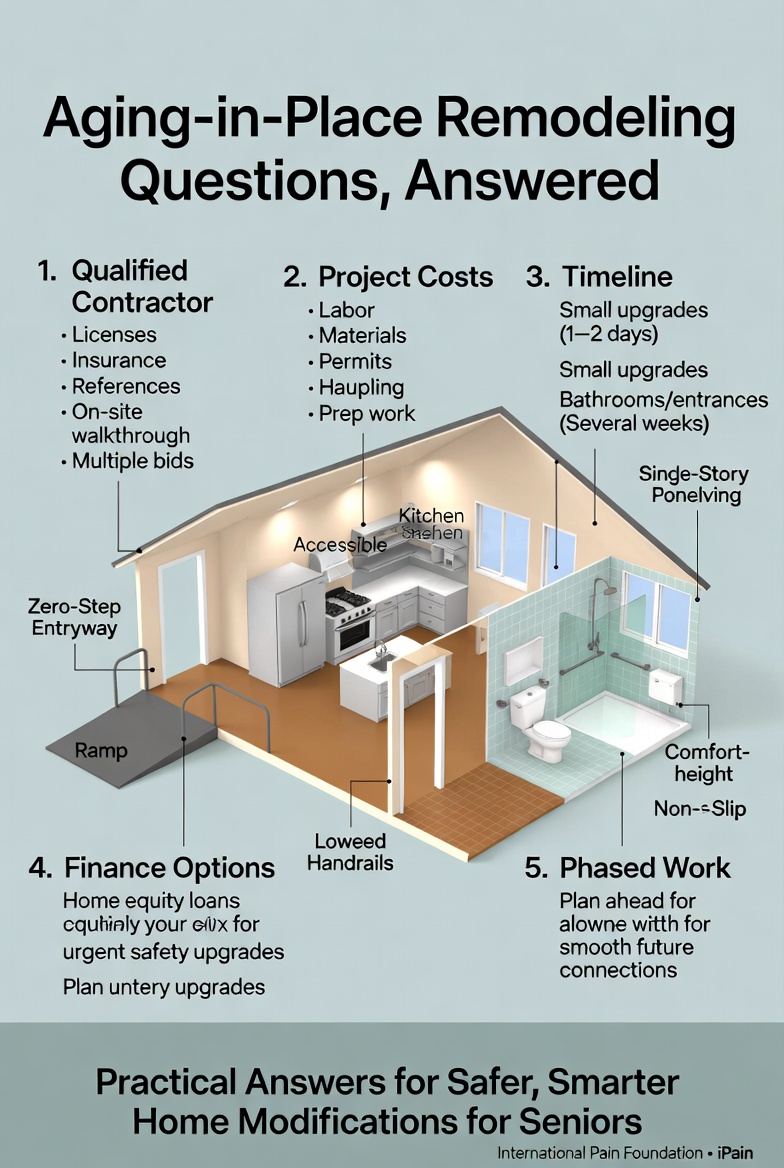
Aging-in-Place Remodeling Questions, Answered
Q: How do I find a qualified contractor for accessibility work?
A: Start by asking for licenses, insurance, and recent references for similar safety upgrades, then request an on-site walkthrough. Because the contractor shortage can make good crews harder to book, get two to three bids early and ask about their realistic start date. If a contractor dismisses grab bar anchoring, doorway clearances, or slip resistance as “easy,” keep shopping.
Q: What do home modification costs typically include?
A: Costs often include labor, materials, permits, hauling, and “hidden” prep like patching drywall or leveling subflooring. Ask each bid to list allowances and unit prices so you can compare apples to apples.
Q: How long do most projects take from estimate to finish?
A: Small upgrades can take a day or two, while bathrooms and entrances may take several weeks. Build in lead time for ordering fixtures and scheduling inspections.
Q: Should I finance accessibility changes, or pay as I go?
A: If safety is urgent, financing can help you fix the highest-risk areas now and spread the cost over time. Keep the scope tight and define what home accessibility remodeling should accomplish for your daily routines.
Q: Can I phase the work without wasting money?
A: Yes, if you plan for future steps, like choosing bathroom walls that can support properly mounted grab bars later. Save all specs and photos so the next phase connects cleanly.
Start Small, Stay Safe: Comfort Changes That Support Independence
When stairs feel steeper, bathrooms feel riskier, and chronic pain support is hard to find, staying at home can start to feel uncertain. The way forward is a steady, informed mindset: choose practical comfort improvements, ask the right questions, and lean on trusted help so decisions stay in your control, home accessibility empowerment in action. With that approach, daily tasks get easier, confidence returns, and independent living success becomes more realistic even on tough days. Small changes today protect independence tomorrow. Pick one improvement this week and ask a family member, neighbor, or contractor to help you start. That aging in place motivation strengthens health, stability, and connection across District 7 for the years ahead.
Authored by Gloria Martinez
Published by International Pain Foundation, Team iPain, iPain Blog
