Pain management is a critical aspect of healthcare, aiming to alleviate discomfort and improve the quality of life for individuals experiencing acute or chronic pain. It involves various techniques and treatments, tailored to address the unique needs and conditions of each patient. Pain can stem from numerous sources, including injuries, surgeries, or chronic illnesses, making personalized pain management plans essential.
Effective pain management requires a comprehensive understanding of the underlying causes and mechanisms of pain. Healthcare professionals often employ a multidisciplinary approach, combining pharmacological treatments, physical therapy, psychological support, and lifestyle modifications. This integrated strategy reflects the principles of preventive medicine, emphasizing proactive care and healthy habits to support long-term well-being.
When exploring pain management options, it is crucial to weigh the benefits and risks of each treatment modality. Painkillers and physical therapy are two widely used approaches, each with unique advantages and potential drawbacks. Understanding these options can empower you to make informed decisions about your pain management plan, optimizing your journey towards recovery and comfort.
The Role of Painkillers in Pain Management
Painkillers, also known as analgesics, play a significant role in alleviating pain by targeting the body’s pain receptors. They are often prescribed for acute pain relief, such as post-surgical discomfort or injury-related pain. Painkillers can be classified into various categories, including nonsteroidal anti-inflammatory drugs (NSAIDs), acetaminophen, and opioids, each with distinct mechanisms of action and applications. When considering long-term medication use, discussing potential effects on liver health is important, particularly for individuals with conditions such as fatty liver disease.
Common Types of Painkillers:
- NSAIDs: These include ibuprofen and aspirin, which reduce inflammation and relieve pain.
- Acetaminophen: Known for its ability to alleviate mild to moderate pain without reducing inflammation, this approach may be considered in broader pain-management plans, including those focused on rheumatoid arthritis treatment.
- Opioids: Powerful pain relievers reserved for severe pain, often under strict medical supervision due to the risk of addiction.
While painkillers are effective in providing immediate relief, they are not without side effects. Long-term use of certain painkillers, particularly opioids, can lead to dependency, gastrointestinal issues, or cardiovascular complications. Therefore, it is crucial to use these medications responsibly, adhering to prescribed dosages and guidelines. Alongside appropriate pain management, maintaining a balanced diet and considering protein supplements when suitable can support overall nutritional needs.
In many cases, painkillers are part of a broader pain management strategy, complementing other therapies like physical therapy. They offer the advantage of quick relief, enabling patients to engage in rehabilitation activities more comfortably and effectively. However, the decision to use painkillers should always be made in consultation with a healthcare provider, considering individual health conditions and treatment goals. Similarly, individuals managing conditions such as alopecia areata should seek professional guidance to ensure that any treatment plan is appropriate for their specific needs.
The Benefits of Physical Therapy for Pain Relief
Physical therapy offers a non-invasive, drug-free approach to pain management, focusing on improving mobility, strength, and function. It involves a series of exercises, manual therapy, and patient education to address the root causes of pain and prevent future occurrences. Physical therapists work closely with patients to develop personalized treatment plans, targeting specific areas of discomfort and dysfunction.
Key Advantages of Physical Therapy:
- Holistic Treatment: Addresses the physical, psychological, and social aspects of pain, while recognizing how factors such as lifestyle, recovery, and body transformation goals can influence overall well-being.
- Prevention Focus: Aims to prevent recurrences by strengthening the body and improving posture.
- Customization: Tailored exercises and techniques to meet individual needs and goals.
Physical therapy is particularly beneficial for chronic pain conditions such as arthritis, back pain, and fibromyalgia. It not only alleviates pain but also enhances the overall quality of life by improving physical capabilities and reducing reliance on medications. Patients often experience increased flexibility, better posture, and enhanced strength, contributing to long-term pain relief.
By empowering you with the tools to manage pain independently, physical therapy promotes self-efficacy and confidence in your ability to control your discomfort. This proactive approach encourages a more active lifestyle, fostering physical and mental well-being. Engaging in regular physical therapy sessions can be a transformative experience, offering sustainable relief and improving your overall health and happiness.
Comparing Painkillers and Physical Therapy: Effectiveness and Safety
When deciding between painkillers and physical therapy, several factors need consideration, including the nature of your pain, lifestyle, and personal preferences. Each approach offers distinct benefits and potential risks, making it essential to assess their effectiveness and safety for your specific situation.
Effectiveness:
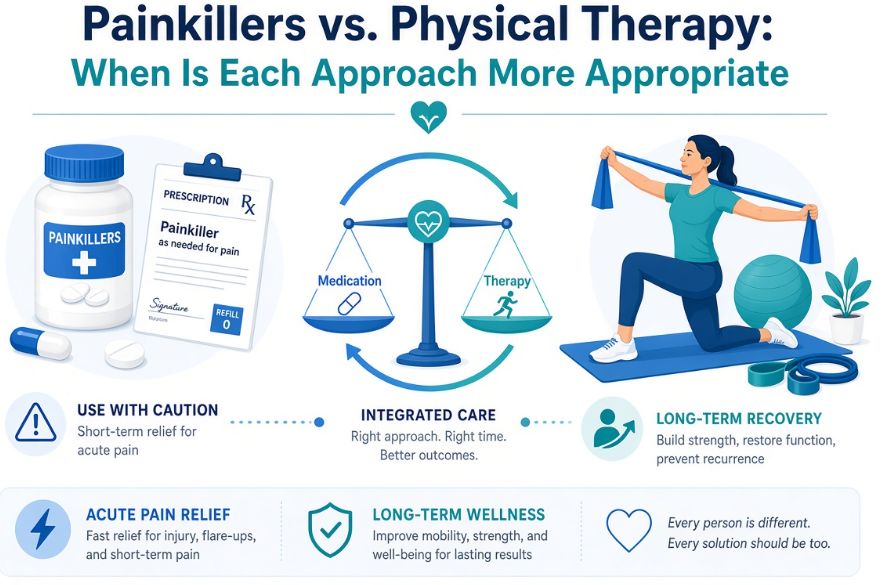
- Painkillers: Provide rapid relief, particularly effective for acute, intense pain. They are suitable for short-term use but may not address underlying causes.
- Physical Therapy: Offers long-term benefits by targeting root causes and enhancing physical function. It may take longer to see results but promotes sustainable pain management.
Safety Considerations:
- Painkillers: Risk of side effects and dependency, especially with prolonged use of opioids. Requires careful monitoring and adherence to medical advice.
- Physical Therapy: Generally safe with minimal side effects. Involves active participation and commitment to prescribed exercises.
The choice between painkillers and physical therapy ultimately depends on your individual needs and health status. In some cases, a combination of both approaches may be the most effective strategy, allowing for immediate relief while addressing long-term rehabilitation goals. Consulting with healthcare professionals can provide valuable insights, helping you navigate your options and develop a comprehensive pain management plan.
When to Consider Painkillers for Pain Management
Painkillers can be an essential component of pain management, particularly in situations where immediate relief is necessary. Understanding when to consider these medications can help you make informed decisions about their use, ensuring they complement your overall treatment plan effectively.
Situations Where Painkillers Are Beneficial:
- Post-Surgical Pain: Painkillers can help manage discomfort following surgical procedures, facilitating recovery and rehabilitation.
- Acute Injuries: In cases of sudden injuries, such as fractures or sprains, painkillers provide quick relief, allowing you to function more comfortably.
- Severe Chronic Pain: For chronic conditions with intense pain episodes, painkillers offer temporary relief, improving daily life activities.
When considering painkillers, it’s vital to discuss your options with a healthcare provider, who can guide you on appropriate dosages and durations. They can also help monitor any side effects or signs of dependency, ensuring your safety and well-being.
While painkillers are effective for short-term relief, it’s crucial to explore complementary therapies that address the underlying causes of your pain. This integrated approach can enhance recovery and minimize the need for long-term medication use, promoting a healthier, more balanced lifestyle.
When to Choose Physical Therapy for Pain Relief
Physical therapy is a valuable option for those seeking a natural, sustainable approach to pain management. It is particularly effective for individuals with chronic pain conditions or those looking to improve their physical function and prevent future injuries.
Ideal Candidates for Physical Therapy:
- Chronic Pain Sufferers: Those with ongoing pain conditions, like arthritis or back pain, benefit from targeted exercises and techniques that alleviate discomfort and improve mobility.
- Post-Injury Rehabilitation: Physical therapy aids in recovery from injuries, restoring strength and function while preventing further damage.
- Preventive Care: Individuals seeking to maintain or enhance physical health and prevent pain-related issues can benefit from regular physical therapy sessions.
Choosing physical therapy involves a commitment to participating in exercises and activities designed to address your pain and enhance your physical capabilities. Working with a trained physical therapist ensures you receive expert guidance, helping you achieve your pain relief goals safely and effectively.
Physical therapy not only reduces pain but also empowers you with the knowledge and skills to manage your condition independently. This proactive approach fosters long-term health benefits, enabling you to live an active, fulfilling life free from the limitations of pain.
The Impact of Chronic Pain on Quality of Life
Chronic pain is a pervasive issue that can significantly affect your quality of life, influencing physical, emotional, and social well-being. Understanding its impact is crucial in developing effective pain management strategies that address not only the symptoms but also the broader implications on daily life.
Effects of Chronic Pain:
- Physical Limitations: Pain can restrict movement and activities, leading to decreased physical fitness and increased risk of further health issues.
- Emotional Strain: Persistent pain often causes stress, anxiety, and depression, affecting mental health and overall happiness.
- Social Challenges: Chronic pain may limit social interactions and activities, leading to feelings of isolation and reduced quality of life.
Addressing chronic pain requires a multifaceted approach that considers its physical and psychological aspects. Combining treatments like painkillers and physical therapy can offer comprehensive relief, targeting both immediate and long-term needs.
By addressing the impact of chronic pain holistically, you can improve your overall quality of life, gaining the ability to engage in activities you enjoy and maintain meaningful relationships. This balanced approach fosters resilience and adaptability, empowering you to overcome the challenges associated with chronic pain.
Integrating Painkillers and Physical Therapy for Comprehensive Care
For many individuals, integrating painkillers and physical therapy provides an optimal approach to pain management. This combination leverages the immediate relief offered by medications with the long-term benefits of physical therapy, addressing both symptoms and underlying causes effectively.
Benefits of Integrative Pain Management:
- Holistic Approach: Combines pharmacological and non-pharmacological treatments for comprehensive care.
- Enhanced Outcomes: Immediate relief from painkillers allows better participation in physical therapy, enhancing rehabilitation success.
- Personalized Care: Treatment plans tailored to individual needs, maximizing effectiveness and minimizing risks.
Coordinating pain management strategies with healthcare providers ensures that both painkillers and physical therapy are used appropriately, optimizing their benefits while minimizing potential drawbacks. Regular assessments and adjustments to the treatment plan can enhance outcomes, ensuring you receive the best possible care.
Integrating these approaches empowers you to take control of your pain management journey, promoting recovery and improving your quality of life. This balanced strategy supports both short-term relief and long-term health, enabling you to live more comfortably and confidently.
Personalizing Your Pain Management Plan
Creating a personalized pain management plan is essential in achieving effective, sustainable relief from pain. This involves a comprehensive assessment of your condition, preferences, and lifestyle, ensuring that the chosen strategies align with your unique needs and goals.
Steps to Personalizing Your Plan:
- Assessment: Evaluate the nature of your pain, its intensity, and impact on daily life.
- Consultation: Discuss options with healthcare providers, considering both medical and non-medical treatments.
- Customization: Tailor treatments to your specific condition, balancing painkillers and physical therapy as needed.
A personalized plan prioritizes your well-being, fostering a sense of empowerment and control over your pain management journey. By actively participating in the decision-making process, you can ensure that your treatment aligns with your values and preferences, enhancing its effectiveness and satisfaction.
Regularly reviewing and adjusting your pain management plan with healthcare professionals is essential, allowing for adaptations as your condition evolves. This dynamic approach supports continuous improvement, ensuring that you receive the most appropriate care at every stage of your recovery.
Conclusion: Making Informed Choices for Effective Pain Management
Navigating the complexities of pain management requires informed decision-making and a comprehensive understanding of available options. By comparing painkillers and physical therapy, you can identify the most suitable approach for your needs, balancing immediate relief with long-term health benefits.
Empowering yourself with knowledge and collaborating with healthcare professionals ensures that you can develop a personalized pain management plan, optimizing your journey towards recovery and well-being. This proactive approach fosters resilience and adaptability, enabling you to overcome the challenges associated with pain and improve your quality of life.
Authored by Laura Watson
Published by International Pain Foundation, iPain Blog, Team iPain
