
For chronic pain patients juggling appointments, prescriptions, and flare-ups, out-of-pocket healthcare costs can feel like a moving target. The core tension is simple and exhausting: symptoms change, care plans shift, and unpredictable medical expenses arrive long after the visit, making it hard to know what “affordable” even means. That uncertainty carries a real emotional impact of medical billing, from dread when the mail comes to guilt about choosing between relief and rent. Naming these healthcare budgeting challenges is the first step toward steadier healthcare cost management.
Build a Simple Plan for Out-of-Pocket Costs
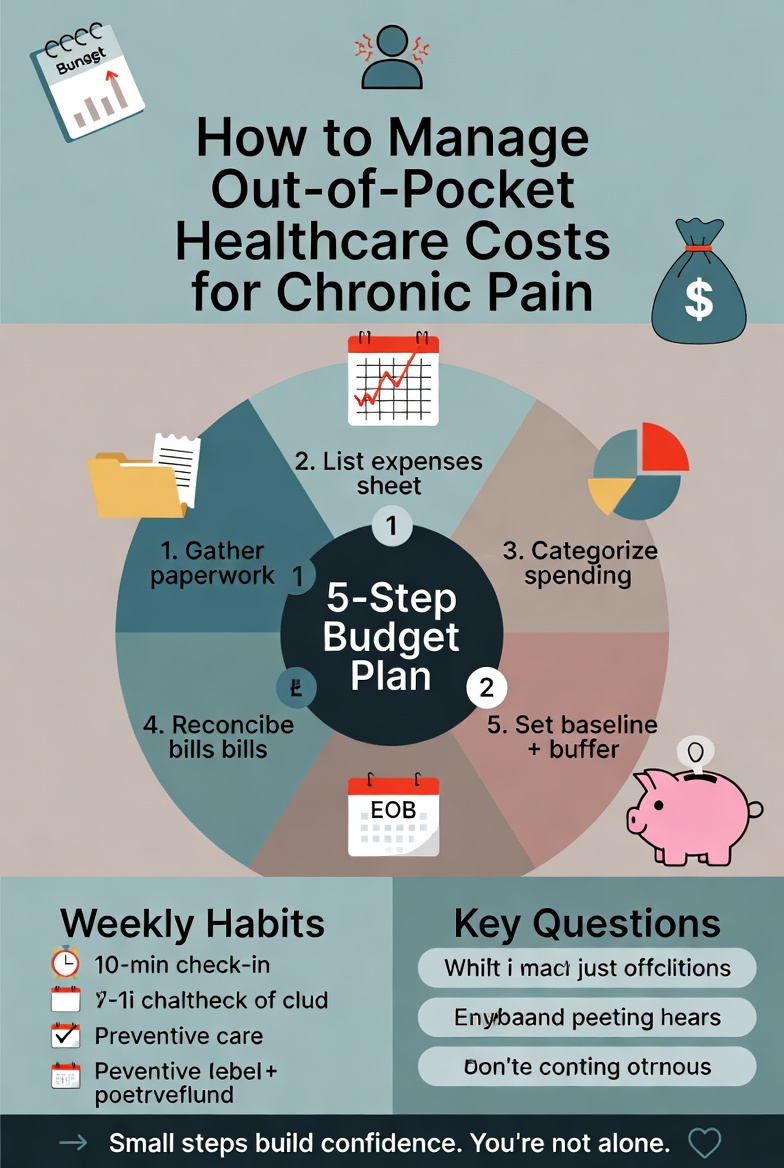
This process helps you see where your money has been going, sort it into clear buckets, and set a realistic plan for upcoming copays, prescriptions, and payment plans. It matters because even small wins in organization can reduce surprises and give you more control when your health needs change.
- Gather your last 3–6 months of paperwork
Start with what you already have: receipts, pharmacy printouts, portal statements, and bank or card transactions that show medical purchases. If you are missing pieces, request a current balance summary and options since outstanding balances and payment options can change what you need to plan for. - List every out-of-pocket item in one place
Create a simple spreadsheet or notes list with four columns: date, provider or pharmacy, what it was for, and what you paid. Include small but frequent costs like parking, supplies, and OTC meds because they can quietly raise your monthly average. - Categorize spending into a few budget-friendly groups
Sort each line into 4 to 6 categories such as copays, prescriptions, tests and imaging, therapy, equipment and supplies, and past balances. Keeping categories broad makes trends easier to spot and helps you decide what costs you can influence. - Reconcile bills with EOBs and flag anything unclear
Match each bill to its Explanation of Benefits so you can confirm what insurance covered versus what you truly owe. Since affordability is the biggest challenge for many people paying medical bills, catching errors or duplications early can prevent you from budgeting for charges that should be corrected. - Set next month’s plan using a “baseline + buffer”
Use your recent average to create a baseline, then add a small buffer for the unexpected, even if it is just $20 to $50. If a bill feels unmanageable, call and ask about splitting it into smaller payments so your healthcare payment management stays steady.
Store Bills and EOBs as Secure PDFs You Can Actually Find
Once you’ve outlined what you’re responsible for paying, the next win is keeping the paperwork tied to those costs organized and easy to pull up. Saving medical bills, explanations of benefits (EOBs), and payment records as secure PDFs gives individuals and families one reliable place to store the documents that prove what was billed, what insurance covered, and what you actually paid. That makes it much simpler to track out-of-pocket spending over time, especially when chronic pain leads to frequent appointments and prescriptions, so you can see patterns, set realistic budgets, and plan for future costs. Having searchable, consistent files also helps you spot billing errors sooner (like duplicate charges or services you didn’t receive) and move faster when you need to dispute a charge or request reimbursement. To protect your privacy, you can use free PDF password protection so only people with the correct password can open those files.
Weekly Habits That Keep Healthcare Costs Predictable
Out-of-pocket costs can creep up when you are busy, in pain, or simply tired of managing details. These habits make budgeting feel lighter by turning cost awareness into quick check-ins and simple choices you can repeat all year.
Ten-Minute Cost Check-In
- What it is: Review charges, copays, and pharmacy totals and update your monthly target.
- How often: Weekly
- Why it helps: Small corrections prevent surprise shortfalls at the end of the month.
In-Network First Sweep
- What it is: Confirm provider, lab, imaging, and facility status before scheduling non-urgent care.
- How often: Per appointment
- Why it helps: You avoid higher rates that often come from out-of-network billing.
Price Ask Script
- What it is: Call ahead and ask for the cash price and payment-plan options.
- How often: Per new service
- Why it helps: You can compare options and choose the least stressful path to pay.
Preventive Care Booking Block
- What it is: Use preventive services covered under the ACA before issues escalate.
- How often: Monthly planning
- Why it helps: It can reduce costly urgent visits later.
Flare-Up Trigger Log
- What it is: Track flare days, extra meds, and unplanned visits in one running note.
- How often: Daily
- Why it helps: Patterns help you plan buffers and adjust care earlier.
Healthcare Budgeting Questions People Ask Most
Q: What’s the difference between an HSA and an FSA?
A: An HSA is usually paired with a high-deductible plan and can roll over year to year, so it works well for long-term healthcare buffering. An FSA is often “use it or lose it” within the plan year, so it’s better for predictable expenses. If you are eligible, opening an HSA is common since between 51% and 58% of HDHP holders go on to open an HSA. Ask HR or your insurer which accounts you can use.
Q: How do I ask for a cash-pay price without sounding awkward?
A: Try: “If I pay at the time of service, what is the self-pay or cash price?” Then ask, “Is that different from the billed amount through insurance?” Real savings can be substantial, like an X-ray for $70 in one example.
Q: When should I negotiate a medical bill?
A: Negotiate when the bill feels unmanageable, when you spot an error, or when you can pay a portion quickly. Start by requesting an itemized bill and asking if they can reprocess or reduce charges.
Q: Can I set up a payment plan even if I have insurance?
A: Yes. Say, “I can pay $___ per month, can we set up a no-interest plan in writing?” Get the terms, due dates, and any fees confirmed before you agree.
Q: Should I use my HSA or FSA for surprise costs?
A: Use the account that helps you avoid high-interest debt while still covering essentials like rent and food. If it’s an FSA expense, pay before deadlines; if it’s an HSA, consider saving receipts so you can reimburse yourself later.
Build Healthcare Cost Confidence With One Small Weekly Habit
Out-of-pocket costs can feel relentless, especially when chronic pain already drains energy, and the uncertainty can make every appointment feel like a financial gamble. A supportive healthcare planning mindset, paired with implementing budgeting strategies, turns chaos into choices by treating healthcare spending as something you can shape, not just endure. With practice, that leads to empowered healthcare spending, sustainable medical expense management, and real financial relief for chronic pain patients without waiting for a “perfect” month. Small, consistent choices create healthcare cost confidence. Choose one next step this week: start tracking medical spending, automate a small healthcare savings amount, or ask one provider about cash-pay rates or a payment plan. That steady progress protects stability and keeps more focus where it belongs, on living well.
