C
For years, many of us in the pain community have been told to choose between a short-acting over-the-counter pill and something more complicated. Sometimes the only other option presented is an opioid. That is not a real choice when you are trying to get through a flare, recover from a procedure, or just make it through the day.
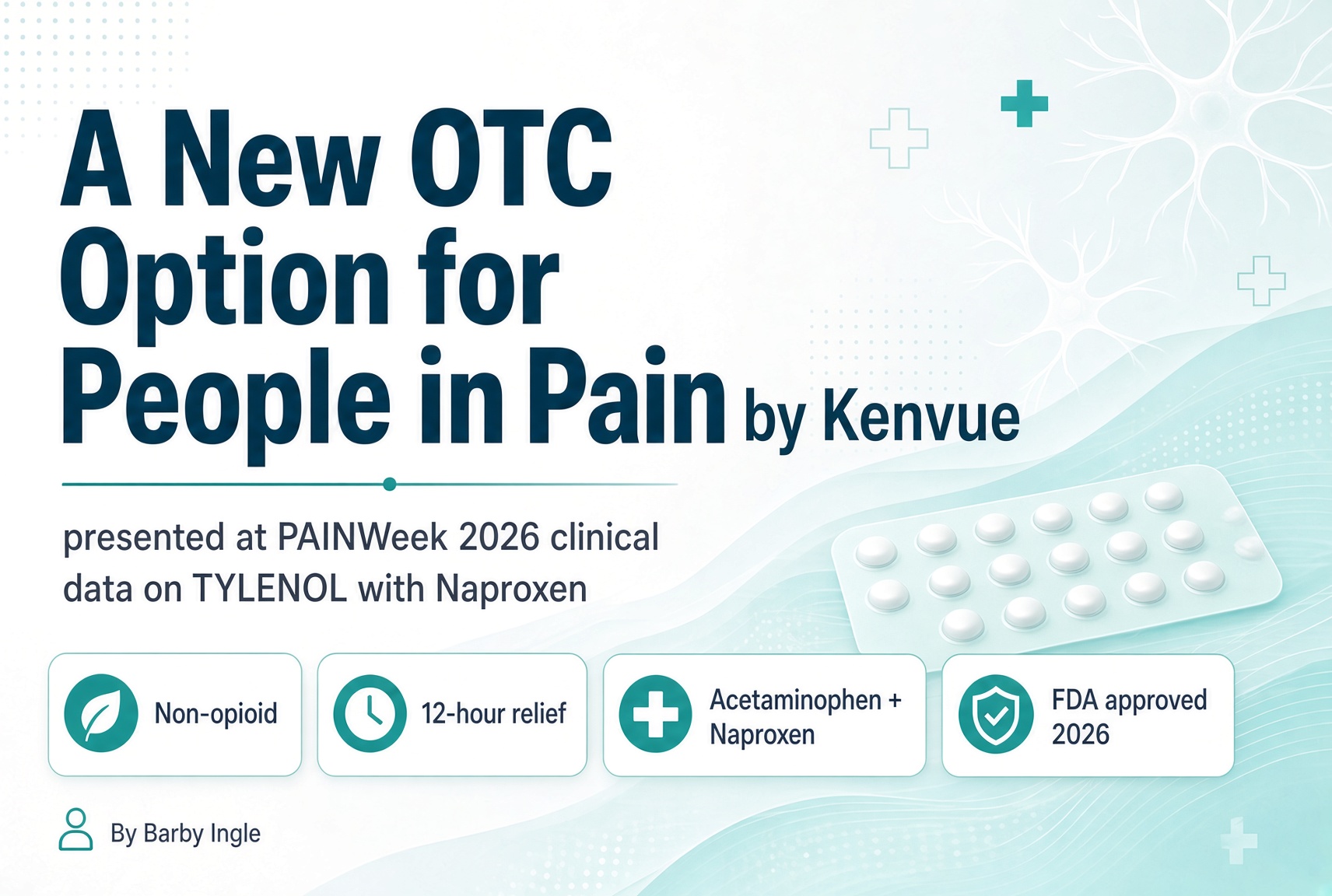
This week at PAINWeek 2026 in Las Vegas, researchers are presenting new clinical data on TYLENOL with Naproxen, a first-of-its-kind over-the-counter combination approved by the FDA in July 2026. It puts 650 mg of acetaminophen and 220 mg of naproxen sodium in a single dose. The company says it can start working in under 30 minutes and last about 12 hours.
I pay attention when a non-opioid option is studied this hard. Too often, OTC products are marketed with big claims and little evidence. This one comes out of an eight-study program that took more than a decade.
What the studies actually showed
In a Phase 3 dental-pain study, the combination worked better over 12 hours than acetaminophen alone and better than naproxen sodium alone. It also kicked in faster than naproxen and lasted longer than acetaminophen.
A second Phase 3 study looked at pain after bunionectomy. That model is usually reserved for prescription pain medicines. This is the first time an OTC-intended product has been tested there. Compared with placebo, patients got significant, sustained relief. Over 48 hours, they also used nearly 40% less opioid rescue medication.
That last point matters. It does not mean nobody will ever need an opioid. Some still do, and access for patients who truly need that tool should never be taken away. It does mean that if we can lower rescue use after surgery with an OTC combination, that is progress.
These findings build on an earlier Phase 2 dental-pain study in which acetaminophen plus naproxen sodium provided more effective and longer-lasting relief than a hydrocodone-acetaminophen combination.
Dr. Todd Bertoch, a principal investigator on the program, put it simply. The combination consistently provided 12 hours of potent relief in two well-validated pain models. Testing an OTC product in post-surgical settings sets a high bar.
Dr. Rajesh Mishra of Kenvue said many people managing persistent pain are stuck choosing between short-term relief and more complex options. This product was designed to give clinicians something straightforward to recommend and patients something simpler to use.
How it is different from what is already in the cabinet
Regular TYLENOL is acetaminophen only. Aleve is naproxen sodium only. This product combines the faster onset of acetaminophen with the longer-lasting anti-inflammatory action of an NSAID.
It is not an opioid. It is indicated for temporary relief of minor aches and pain in adults and children 12 and older. Under 12, talk with a healthcare professional first.
That “temporary” and “minor” language on the label is important. This is not a cure for CRPS, RSD, or other complex chronic conditions. It is another tool. In our world, tools matter.
What is happening at PAINWeek
Four scientific posters are being presented, including first-time looks at the two pivotal Phase 3 studies. There will also be posters on how the combination works in the body and a national pharmacist survey, plus a breakfast symposium, expert roundtable, and booth. More analyses from the same research program are expected later this year.
Yes, this is part of the evidence that supported the July FDA approval.
What I want patients to do with this information
Do not start a new medicine just because it is new. Read the Drug Facts label. Ask your provider if acetaminophen plus an NSAID is safe for you. That is especially true if you have liver issues, kidney disease, stomach-ulcer risk, heart concerns, or if you already take other products with acetaminophen or NSAIDs.
I have spent more than two decades learning that trying smarter beats trying harder. Part of trying smarter is knowing what is coming to the pharmacy shelf, what the studies actually measured, and what questions to take to your care team.
TYLENOL with Naproxen is expected at major U.S. retailers soon. You can learn more at tylenol.com. Clinicians can also review product details at TYLENOL Professional.
More options. Better data.
A non-opioid choice that was studied in real post-surgical pain. That is the kind of news the pain community should hear, and then discuss with the people who know our individual medical histories.
Never give up, and never give in. Keep asking for proper and timely care.
About the Author: Barby Ingle lives with reflex sympathetic dystrophy (RSD), migralepsy, endometriosis, and other chronic conditions. She is a chronic pain educator, patient advocate, motivational speaker, and best-selling author on pain topics. More information is available at barbyingle.com.
Published by International Pain Foundation, iPain Blog, Team iPain
