
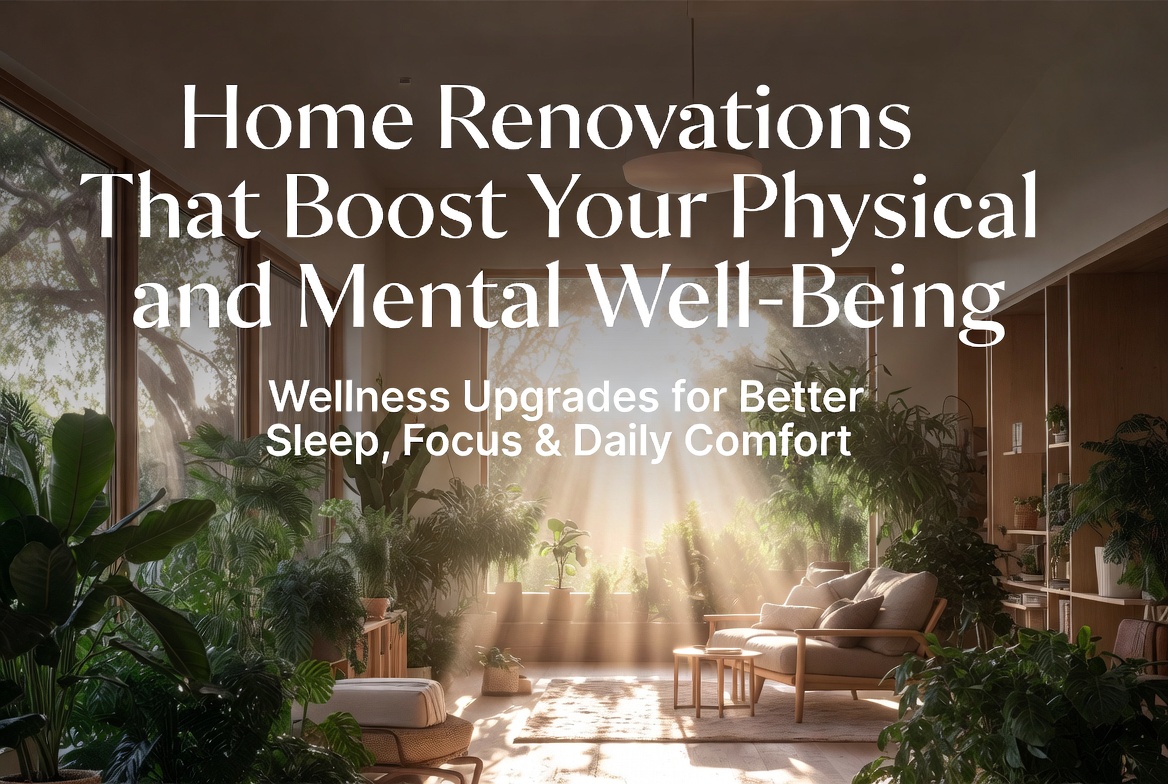
Busy parents juggling work and wellness, remote professionals spending long days indoors, and renters negotiating upgrades with landlords often sense the same problem: the home environment impact makes it harder to feel steady, rested, and well. When home renovations focus only on style or resale, they can miss the everyday friction that drags down energy, comfort, and mood. Health-minded updates can create healthy living spaces that support real well-being enhancement, with clear physical health benefits and lasting mental health improvements. The goal is a home that helps people feel better more often.
Understanding How Design Choices Shape Wellness
At its core, health-focused renovation means treating your home like a daily support system. Lighting affects sleep and mood, ventilation and indoor air quality shape how you breathe and think, and layout influences how easily you can reset. When you see these links, decisions stop feeling random and start feeling intentional.
This matters because small environmental stressors add up when you live and work at home. Better airflow can reduce irritants, and the EPA notes that dampness and mold raise the risk of asthma and related respiratory problems. Better light and flow also make it easier to focus, unwind, and feel in control.
Imagine a dim, closed-off room that always feels stuffy by mid-afternoon. A brighter window treatment, a quiet exhaust fan, and a clearer path through the space can make the same room feel calm and usable. Like good shoes, the right fit reduces strain you did not notice until it is gone.
With priorities clear, funding choices like a home equity loan become easier to match to your budget.
Plan the Budget: Use Home Equity for Wellness Upgrades
Once you understand which design choices will support your health day to day, the next step is figuring out how to pay for those changes in a way that won’t add stress.
A home equity loan can be a practical way to fund health-focused renovations using the value you’ve already built in your home. With this type of loan, you borrow a lump sum of cash and use your home’s equity as collateral, which can make it easier to match a specific project budget to predictable monthly home equity loan payments. Common requirements often include having enough equity in the home, good credit, stable income, and a debt-to-income ratio that meets the lender’s guidelines.
With a realistic budget in place, you can start prioritizing the upgrades that will make your home feel more restorative and supportive.
Make It Restorative: 6 Upgrades You Can Prioritize
A restorative home design doesn’t require a total gut renovation, it’s about choosing wellness-focused renovation strategies that reduce daily friction and help your nervous system settle. If you’re using a fixed monthly payment (including options like home equity financing), it can be easier to prioritize upgrades that deliver steady, everyday relief.
- Map your “daily flow” and remove one bottleneck: Walk through a normal weekday and note where you consistently hesitate, crowded entryway, tight kitchen path, awkward door swings. For layout optimization, start by widening the main walkway (even 6–12 inches can help), reversing a door swing, or relocating a frequently used item to eliminate backtracking. The goal is fewer micro-stressors, not a magazine-perfect layout.
- Create a decompression zone near the entrance: Choose a small area, by the front door, garage entry, or hallway, and make it the “transition space” where clutter can’t spread. Add a bench, hooks at shoulder height, a closed cabinet for visual calm, and a tray for keys/mail. This is an efficient storage solution that protects the rest of the home from the pile-up that often fuels anxiety.
- Upgrade one room with healthy building materials first: Pick the space where you spend the most time (often a bedroom or home office) and prioritize low-odor, low-emission finishes. Look for paints, sealants, and flooring labeled low-VOC, and consider materials chosen for moisture management. If mold has ever been an issue, favor assemblies that dry easily and avoid wall-to-wall carpet in damp zones.
- Tame noise at the “weak points,” not everywhere: For noise reduction techniques, target door gaps, shared walls, and hard surfaces that bounce sound. Start with weatherstripping and a solid-core door for a bedroom or office; then add a thick rug and curtains to soften echo.
- Design storage around “categories,” not rooms: List 8–12 categories that create visual clutter (paper, chargers, pet supplies, workout gear), then assign each a home near its point of use. Use shallow drawers for small items, vertical dividers for baking sheets and cutting boards, and closed fronts where you want the room to feel calmer. This approach prevents the common cycle of “tidy, explode, repeat.”
- Prioritize sleep supports as a phased package: If you can’t do everything at once, bundle the bedroom upgrades that work together: blackout window coverings, quiet door hardware, better air sealing, and warmer, dimmable lighting. Plan the “invisible” work (air sealing, electrical, insulation) before the “pretty” work (paint, trim) so you don’t pay twice. A clear scope makes it easier to match your wish list to a predictable monthly payment.
Pick two or three upgrades that address your biggest daily stress points, and you’ll have a plan that still works even if your budget or timeline has to stay flexible.
Wellness Renovation FAQs Homeowners Ask
If you’re trying to feel better at home without overextending, these answers can help.
Q: What wellness upgrade should I do first if I can only pick one?
A: Start with the room you use to recover, usually your bedroom or home office. Choose a change that improves sleep or breathing right away, like blackout shades, better ventilation, or low-odor finishes. A small, high-use win builds momentum without overwhelming your budget.
Q: How do I decide what to do now versus later?
A: Do “invisible” health and comfort work first, such as fixing moisture, sealing drafts, and addressing noisy doors. Then phase in cosmetic updates like new paint or trim. This sequencing helps you avoid rework and protects your investment.
Q: Should I follow the 30% rule for renovation spending?
A: The popular 30% rule can be a rough reference, but it is not a wellness plan. A better approach is setting a monthly comfort budget and prioritizing upgrades that reduce daily strain. If you feel unsure, price two tiers: a “must-do for health” scope and a “nice-to-have later” scope.
Q: How can we keep money stress from taking over the project?
A: Budget tension is common and can spill into everyday life. Protect your peace by choosing one decision-maker, setting a clear cap plus a small contingency, and writing down what “done” means before work starts. When something changes, pause and re-approve the plan instead of reacting in the moment.
Q: Can small changes really make a difference for mental well-being?
A: Yes, especially when they reduce daily friction. Simple steps like better entry storage, softer lighting, and quieter sleep spaces can lower the sense of constant “background stress.” Pick changes you will feel every day, not just notice on reveal day.
Steady, thoughtful upgrades add up to a home that supports you when life feels loud.
Build Long-Term Well-Being with One Health-First Renovation Choice
It’s easy to feel stuck between wanting a healthier home and the real limits of budget, time, and renovation fatigue. A steadier path is to treat wellness upgrades as thoughtful home improvements you phase in with clear priorities, so your space becomes a health-centric living environment without overwhelming your life. Over time, this kind of motivational renovation advice supports sustainable home health enhancements that make daily routines calmer, safer, and more comfortable, empowering homeowners to choose progress over perfection. One thoughtful upgrade, repeated over time, creates long-term well-being at home. Choose one next step today that fits your budget and your needs, then schedule the next small phase when it feels manageable. That pacing matters because a supportive home builds resilience, energy, and connection for the years ahead.
Authored by Scott Sanders
Published by International Pain Foundation, iPain Living, Team iPain
